



Top Mistakes to Avoid When Planning Commercial Construction in Costa Rica
Summary:
- Developers often overlook Costa Rica’s strict construction regulations.
- Poor budgeting and timeline planning lead to costly overruns.
- Choosing inexperienced contractors or ignoring site-specific challenges causes delays.
- Environmental compliance and sustainable practices are frequently neglected.
- Strategic planning, proper permits, and expert consultation are essential for successful commercial construction.
1. Underestimating Costa Rica’s Regulatory Requirements
One of the most frequent mistakes in commercial construction is underestimating Costa Rica’s legal and regulatory landscape. Local municipalities enforce strict building codes, zoning restrictions, and environmental regulations. Developers who skip these steps often face delays, fines, or project halts. For instance, failing to secure plans and permits can easily delay a project by several months.
Practical Strategy: Partner with local experts who are familiar with municipal regulations. We helped a client in San José pre-check zoning restrictions and environmental requirements, saving them approximately six weeks in potential delays.
Result: Smooth approvals, faster inspections, and zero legal complications.
2. Ignoring Site-Specific Challenges
Costa Rica’s terrain is highly variable—from coastal plains to mountainous regions. Many developers overlook critical site-specific challenges, including soil quality, flood risks, and seismic activity. Skipping proper evaluation can lead to foundation problems, water damage, and structural instability.
Practical Tip: Conduct detailed geotechnical surveys before starting construction. Experienced engineers evaluate soil type, drainage, and seismic risk to ensure the building is safe and long-lasting. For example, in a Puntarenas commercial project, early soil testing helped avoid a foundation correction that would have cost over $50,000.
Our engineering services provide full site evaluation and structural planning to prevent such costly mistakes.
3. Failing to Plan an Accurate Budget
Budget overruns are one of the most common pitfalls in Costa Rican commercial projects. Developers frequently underestimate labor costs, material availability, and import duties. This leads to unexpected expenses and project delays.
Pro Strategy: Create a detailed budget that includes all categories: land, permits, labor, materials, and a contingency fund of at least 15–20%. We recently managed a retail project in Ciudad Neily where careful budgeting allowed the client to absorb a 10% rise in imported steel costs without exceeding their original budget.
4. Choosing the Wrong Contractors
Contractor selection is critical. Not all Costa Rican construction firms have experience with large-scale commercial projects. Choosing an inexperienced team can result in subpar workmanship, delays, and legal complications.
Tip: Always check licensing, review portfolios, and request client references, We manage both design and construction, ensuring consistency and accountability.
Case Study: Switching to a qualified local contractor for a retail project cut the expected timeline from 12 months to 9 months without compromising quality.
5. Neglecting Environmental and Sustainability Considerations
Costa Rica is globally recognized for its sustainability initiatives. Many developers ignore environmental impact assessments or eco-friendly design principles, putting projects at risk of delays or regulatory penalties.
Strategy: Integrate green building materials, energy-efficient designs, and sustainable water and waste management from the outset. For example, a mixed-use development in San José that used sustainable materials reduced long-term operational costs by 18% while receiving positive recognition from the community.
6. Poor Project Management
Commercial projects are inherently complex, involving multiple stakeholders, timelines, and suppliers. Poor project management results in miscommunication, extended timelines, and inflated costs.
Strategy: Hire a professional project management team to oversee every phase of the project. This ensures proper coordination between architects, engineers, and contractors.
Real Example: We managed a multi-site commercial office project across Costa Rica, completing it two months ahead of schedule thanks to precise project coordination.
7. Ignoring Local Supply Chains
Overreliance on imported materials is risky. Shipping delays, tariffs, and quality issues can significantly impact the project.
Pro Tip: Identify reliable local suppliers for key construction materials. This reduces shipping delays, supports local businesses, and often lowers costs.
Case Example: For a hotel project in Guanacaste, sourcing 60% of materials locally reduced procurement costs by 12% and prevented a three-week shipping delay.
8. Skipping Legal and Contractual Details
Contracts and agreements in Costa Rica must adhere to local laws. Missing clauses on delays, quality, or payments can result in disputes and financial loss.
Strategy: Engage legal counsel familiar with Costa Rican construction law to review contracts thoroughly. Ensure they include clear timelines, material specifications, and penalties for delays.
9. Overlooking Long-Term Maintenance
Commercial buildings require long-term planning for maintenance and operational efficiency. Poor planning increases costs over time.
Solution: Choose low-maintenance materials and schedule regular inspections. Our engineering team designs structures to reduce maintenance needs, saving clients 15–20% over a decade.
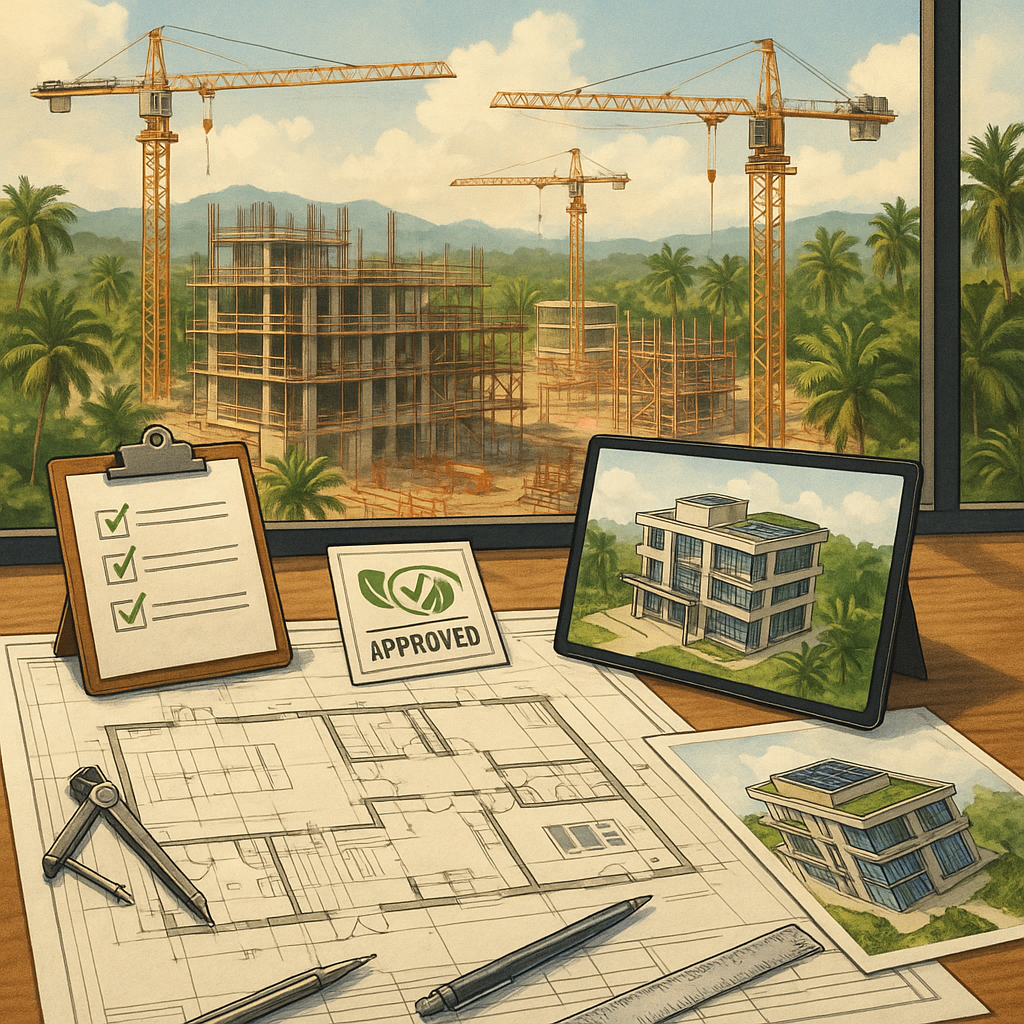
10. Skipping 3D Visualization
Many developers skip 3D visualization to save costs. This often leads to costly design changes mid-construction.
Strategy: Utilize professional 3D rendering services to validate designs before construction. This allows stakeholders to spot potential issues early.
Real Example: A commercial office in Liberia revised its façade after reviewing 3D renders, avoiding $25,000 in mid-construction changes.
FAQ
Q1: What is the most common mistake in Costa Rican commercial construction?
ANS: Skipping proper permits and regulatory checks is the most frequent error, leading to project delays.
Q2: How can I avoid contractor-related issues?
ANS: Verify licenses, check portfolios, request references, and consider experienced companies like Brunka Engineering.
Q3: Why is sustainability important in Costa Rican construction?
ANS: Costa Rica prioritizes eco-friendly building practices, reducing environmental impact and long-term operational costs.
Q4: How does 3D rendering help in commercial construction?
ANS: It allows you to visualize the project early, catch errors, and make design adjustments before construction begins.
Q5: Can local materials reduce project costs?
ANS: Yes, sourcing local materials lowers shipping costs, shortens timelines, and supports reliable supply chains.
Conclusion
Planning a commercial construction project in Costa Rica is exciting but challenging. Avoiding common mistakes—like underestimating regulations, poor budgeting, inexperienced contractors, and skipping sustainability—can save you significant time, money, and stress. By partnering with experienced professionals, leveraging local resources, and planning strategically, you ensure your project not only meets legal requirements but also stands the test of time.
Start your commercial construction journey right by contacting Brunka Engineering for expert guidance and a smoother, successful project.